
slice-of-thai.com → Thai Language → The Five Tones of Thai
The Five Tones of Thai
Table of Contents
- Introduction
- What's a Tonal Language?
- Thai Has Five Tones
- Spectrograms
- Voice Viewer: See Your Own Spectrogram and Compare!
- Looking at the Five Tones of Thai
- Details and Examples
- Disappearing Tones
- Unstressed Tones
- How The Tones are Written
- Evolving Tones
Introduction
Learning to speak and recognize the five "terrible tones" of the Thai language is always a daunting task, but in this document we'll present some tools and tricks to make it much easier!| Support This Site | I work on this site in my off hours. Please help me to push aside my day job and work on it more by supporting the site in one of these ways: |
 | donate now  Use your credit card or PayPal to donate in support of the site. |
 | Learn Thai with my Talking Thai-English-Thai Dictionary app: iOS, Android, Windows. |
 | Experience Thailand richly with my Talking Thai-English-Thai Phrasebook app. |
 | Visit China easily with my Talking Chinese-English-Chinese Phrasebook app. |
 | I co-authored this bilingual cultural guide to Thai-Western romantic relationships. |
 | Pick a Thai learning book from my list or buy anything at all from Amazon. |
I work on this site in my off hours. Please help me to push aside my day job and work on it more by supporting the site in one of these ways:
| Choose Your Own Thai Font and Size |
|---|
| One of my biggest frustrations when trying to learn or use Thai language on the web is that I can never read the microscopic Thai letters that everyone seems to use on their web pages! At slice-of-thai.com, we proudly present to you the buttons that every site should have. Choose your Thai font and font size and we will remember your setting and instantly apply it to all pages on slice-of-thai.com. |
| Font Size: | |
|---|---|
| Font: | |
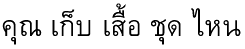
| Sample: | คุณ เก็บ เสื้อ ไว้ ไหน |
| Choose Your Favorite Pronunciation Guide Systems |
|---|
| As you've probably noticed, nearly every book and website uses a different pronunciation guide system (also known as "romanization," "karaoke language," "transliteration," or "phonemic transcription" systems) for helping you learn the pronunciation of native Thai words. Here at slice-of-thai.com, we let you choose the system(s) you want to see. Check your favorite system(s) below, and we will remember your setting and instantly apply it to all pages on slice-of-thai.com. Pronunciation guides are a useful crutch, but they have hidden pitfalls which may surprise you: learn more about this, as well as how each system differs, at Pronunciation Guide Systems for Thai. Also, you can click on any system below for more information. |
| System | Description | Example คุณ เก็บ เสื้อ ไว้ ไหน | |
|---|---|---|---|
| Paiboon+ | Used in all recent Paiboon titles | [kun-gèp-sʉ̂ʉa-wái-nǎi] | |
| Paiboon | Benjawan Poomsan Becker's Thai for Beginners | [kun-gèp-sʉ̂a-wái-nǎi] | |
| Easy Thai | Spells out each syllable using simple Thai | [คุนM-เก็บL-เซื่อF-ไว้H-ไหฺนR] | |
| TLC | From the fantastic thai-language.com | [khoonM-gepL-seuuaF-waiH-naiR] | |
| Tiger | Thai learning books from Tiger Press | [koon-gèp-sûea-wái-nǎi] | |
| Haas | Mary Haas (adopted by AUA, US Peace Corps) | [ˈkhun ˈkèp ˈsʉ̂a ˈwáy ˈnǎy] | |
| IPA | International Phonetic Alphabet: nerds love it | [ˈkʰun ˈkèp ˈsɯ̂ːa ˈwáj ˈnǎj] | |
| ALA-LC | ALA / US Library of Congress | [khunM-kepL-sư̄aF-waiH-naiR] | |
| TYT | Teach Yourself Thai by David Smyth | [ˈkOOn ˈgèp ˈsêu-a ˈwái ˈnǎi] | |
| LP | System from the Lonely Planet guidebooks | [khun-kèp-sêua-wái-nǎi] | |
| T2E | From thai2english.com | [kun-gèp-sêua-wái-nǎi] | |
| Thai Govt+ | Lame system used for Thai road signs + tones | [khun-kèp-sûea-wái-nǎi] | |
| Example of how it will look: [sʉ̂ʉa, sʉ̂a, เซื่อF, seuuaF, sûea, ˈsʉ̂a, ˈsɯ̂ːa, sư̄aF, ˈsêu-a, sêua, sêua, sûea] | |||
| System example shows: | |
| Paiboon+ Used in all recent Paiboon titles [kun-gèp-sʉ̂ʉa-wái-nǎi] | |
| Paiboon Benjawan Poomsan Becker's Thai for Beginners [kun-gèp-sʉ̂a-wái-nǎi] | |
| Easy Thai Spells out each syllable using simple Thai [คุนM-เก็บL-เซื่อF-ไว้H-ไหฺนR] | |
| TLC From the fantastic thai-language.com [khoonM-gepL-seuuaF-waiH-naiR] | |
| Tiger Thai learning books from Tiger Press [koon-gèp-sûea-wái-nǎi] | |
| Haas Mary Haas (adopted by AUA, US Peace Corps) [ˈkhun ˈkèp ˈsʉ̂a ˈwáy ˈnǎy] | |
| IPA International Phonetic Alphabet: nerds love it [ˈkʰun ˈkèp ˈsɯ̂ːa ˈwáj ˈnǎj] | |
| ALA-LC ALA / US Library of Congress [khunM-kepL-sư̄aF-waiH-naiR] | |
| TYT Teach Yourself Thai by David Smyth [ˈkOOn ˈgèp ˈsêu-a ˈwái ˈnǎi] | |
| LP System from the Lonely Planet guidebooks [khun-kèp-sêua-wái-nǎi] | |
| T2E From thai2english.com [kun-gèp-sêua-wái-nǎi] | |
| Thai Govt+ Lame system used for Thai road signs + tones [khun-kèp-sûea-wái-nǎi] | |
| Example of how it will look: [sʉ̂ʉa, sʉ̂a, เซื่อF, seuuaF, sûea, ˈsʉ̂a, ˈsɯ̂ːa, sư̄aF, ˈsêu-a, sêua, sêua, sûea] | |
What's a Tonal Language?
In English and many other Western languages of the world, you can say a given word with many different pitches of voice, (say it to yourself: "He's cold." "Is he cold?" "I'm freakin' cold!") but it is still the same word. The pitch of your voice does impart meaning to the sentence (e.g. asking a question, being emphatic) but it does not change the meaning of the word itself.The Thai language is tonal, meaning that when you speak a word, the pitch of your voice is an integral part of that word. If you speak with the wrong pitch, you are saying a different word.
For example, in Thai, the word that sounds (roughly) like "maa" means "to come", but the word that sounds (roughly) like "maa?" means "dog" or "horse" depending on how you say it!
Thai Has Five Tones
In total, Thai has five tones, named "mid," "low," "falling," "high," and "rising." While they're a good start, these names are nowhere near enough information to really understand what the tones sound like. Adding insult to injury is that when you ask a Thai to demonstrate a given tone for you, he or she will often exaggerate it to the point where it is no longer useful as an example!In this document, you can listen to some real-world examples of tones, and even better, you can visualize those tones using a type of chart called a spectrogram. You can even use our Voice Viewer tool to see the spectrogram of your own voice and compare it with the model! Read on...
Spectrograms
This page uses colorful charts called spectrograms to help explain the tones of Thai.To understand how a spectrogram works, first click the little play button at the left end of the player bar below to hear a silly sound:
If you have a slow internet connection, you may have to wait a little bit before the sound plays.
If the player is playing (the seconds are counting up and the bar is making its way to the right) but you still don't hear any sound, you need to adjust the volume on your computer. You might also need to turn up the volume on the right end of the player bar above. Or, reach under the desk and see that your headphones are actually unplugged :)
A spectrogram plots that silly sound over time like this:
Click the play button of the player bar below the spectrogram and you will hear the silly sound again. Or, you can click anywhere in the image itself or in the player bar to start playing at that point.
Notice how the vertical position of the colorful curve in the plot follows the pitch of the silly sound. Sounds that are lower in pitch are near the bottom of the chart, and sounds that are higher in pitch are near the top of the chart.
Notice the blue fuzz at the bottom: that is the very low-pitched, wind-like blowing sound you can also hear along with the whistling.
The color of the spectrogram at a given point indicates how much sound with that pitch you were making at that time. The color scale works like this:

So the red parts of the spectrogram represent the most noticeable pitches.
Voice Viewer: See Your Own Spectrogram and Compare!
Here at slice-of-thai.com, we offer:Voice Viewera free software tool you can use to see the spectrogram of your own voice as you speak into a microphone.
We recommend that you get Voice Viewer and use it to compare the sounds of your own voice with the samples on this page!
Looking at the Five Tones of Thai
Ok, now we're equipped to learn about the tones.Here is a sound clip and spectrogram of how native Thai speakers pronounce the 5 tones:
Bring up a window with Voice Viewer running and then see if you can produce these shapes with your own voice.
Remember it's the overall contour of each tone that you want to imitate. If your shapes look like these but they're just stretched out or scrunched up horizontally, then you're ok. It just means you spoke more slowly or more quickly than the picture.
If you have any trouble gettting Voice Viewer to work, or to produce pictures like these, check out our Voice Viewer troubleshooting section.
How High? How Low?
The mid tone has whatever comfortable pitch you normally use when speaking. The other tones are relative to that. So, two speakers may utter the same tones using very different pitches. For example, here's a sound clip and spectrogram of a native female speaker (stolen from the wonderful SEAsite at http://www.seasite.niu.edu) followed by me:Here's another native speaker example, for comparison:
Details and Examples
Mid Tone
[bpaa, bpaa, ปาM, bpaaM, pbah, ˈpaa, ˈpaː, pāM, ˈbpah, paa, bpaa, pa] [ปาM]As mentioned above, the mid tone has whatever comfortable pitch you usually use to speak English. Textbooks will tell you that the mid tone is not supposed to rise or fall. In a native Thai speaker's normal, fluent speech, and in the mid tone examples with my voice above, the mid tone remains at a steady pitch as expected.
You Had to Ask
However, I have found that if you ask nearly any Thai native to demonstrate the mid tone to you, their voice will start at the expected, comfortable pitch, but then it will sometimes rise a tiny bit, and then it will always fall somewhat at the end. I've watched about 30 native English speakers learn Thai, and this has confused every one of them. We easily mistake this "exaggerated" mid tone for the falling tone. Don't be confused. There are not 6 tones in Thai; they're just trying to be "clearer" by exaggerating the tone in this way. You can tell it's a mid tone because it starts at the speaker's normal comfortable pitch, as opposed to a falling tone which starts at an unusually high pitch for the speaker.We heard one example just above (the SEAsite speaker). Notice how the spectrogram of her "mid" tone falls at the end. Here's another example, where we'll hear the "textbook" mid tone as we poor English speakers expect it, followed by the "exaggerated" mid tone we hear from native Thai speakers, followed by a real falling tone for reference:
Sample words:
มา [maa, maa, มาM, maaM, mah, ˈmaa, ˈmaː, māM, ˈmah, maa, maa, ma]
ดี [dii, dii, ดีM, deeM, dee, ˈdii, ˈdiː, dīM, ˈdee, dii, dee, di]
ไกล [glai, glai, ไกฺลM, glaiM, glai, ˈklay, ˈklaj, klaiM, ˈglai, klai, glai, klai]
ทาง [taang, taang, ทางM, thaangM, tahng, ˈthaaŋ, ˈtʰaːŋ, thāŋM, ˈtahng, thaang, taang, thang]
Low Tone
[bpàa, bpàa, ป่าL, bpaaL, pbàh, ˈpàa, ˈpàː, pāL, ˈbpàh, pàa, bpàa, pà] [ป่าL]This tone starts at a very low pitch. To make your speech clear, pick the lowest pitch you can comfortably make with your voice (and wish that native Thai speakers would do the same). Like the mid tone, our textbooks tell us that the low tone is not supposed to change in pitch at all. However, as seen in all the spectrograms above (the native speaker and me), your natural tendency will be to have some sort of very fast descent down to the low pitch at the beginning of your syllable. This is ok. You can tell the syllable is a low tone because it starts at or below the speaker's comfortable pitch and goes very low (lower even than the "exaggerated" mid tone).
Sample words:
ข่า [kàa, kàa, ข่าL, khaaL, kàh, ˈkhàa, ˈkʰàː, khāL, ˈkàh, khàa, kàa, khà]
ติ [dtì, dtì, ติL, dtiL, dtì, ˈtì, ˈtì, tiL, ˈdtì, tì, dtì, tì]
เก็บ [gèp, gèp, เก็บL, gepL, gèp, ˈkèp, ˈkèp, kepL, ˈgèp, kèp, gèp, kèp]
เขต [kèet, kèet, เขดL, khaehtL, kàyt, ˈkhèet, ˈkʰèːt, khētL, ˈkàyt, khèht, kàyt, khèt]
Falling Tone
[bpâa, bpâa, ป้าF, bpaaF, pbâh, ˈpâa, ˈpâː, pāF, ˈbpâh, pâa, bpâa, pâ] [ป้าF]This tone should be called the "start your voice a lot higher than you normally speak and slide down to a lot lower than you normally speak" tone. Thai speakers recognize this tone because it starts very high and falls.
Sample words:
ค่า [kâa, kâa, ค่าF, khaaF, kâh, ˈkhâa, ˈkʰâː, khāF, ˈkâh, khâa, kâa, khâ]
บ้าน [bâan, bâan, บ้านF, baanF, bâhn, ˈbâan, ˈbâːn, bānF, ˈbâhn, bâan, bâan, bân]
พูด [pûut, pûut, พูดF, phuutF, pôot, ˈphûut, ˈpʰûːt, phūtF, ˈpôot, phûut, pôot, phût]
ใกล้ [glâi, glâi, ไกฺล้F, glaiF, glâi, ˈklây, ˈklâj, klaiF, ˈglâi, klâi, glâi, klâi]
มั่น [mân, mân, มั่นF, manF, mân, ˈmân, ˈmân, manF, ˈmûn, mân, mân, mân]
เตี้ย [dtîia, dtîa, เตี้ยF, dtiiaF, dtêea, ˈtîa, ˈtîːa, tīaF, ˈdtêe-a, tîa, dtîa, tîa]
High Tone
[bpáa, bpáa, ป๊าH, bpaaH, pbáh, ˈpáa, ˈpáː, pāH, ˈbpáh, páa, bpáa, pá] [ป๊าH]This tone should be called the "start your voice a lot higher than you normally speak and slide it up even a little bit higher" tone. There's one simple rule here: If you don't feel like a chipmunk while trying to speak this tone, you're doing it wrong!
At all times, your voice should be unusually high for your normal speech. You must start high because otherwise a Thai person will think you're speaking a rising tone.
Sample words:
ท้าย [táai, táai, ท้ายH, thaaiH, táai, ˈtháay, ˈtʰáːj, thāiH, ˈtái, thái, táai, thái]
คิด [kít, kít, คิดH, khitH, kít, ˈkhít, ˈkʰít, khitH, ˈkít, khít, kít, khít]
รั้ว [rúua, rúa, รั้วH, ruaaH, róoa, ˈrúa, ˈrúːa, rūaH, ˈróo-a, rúa, rúa, rúa]
เล็ก [lék, lék, เล็กH, lekH, lék, ˈlék, ˈlék, lekH, ˈlék, lék, lék, lék]
น้อย [nɔ́ɔi, nɔ́ɔi, น้อยH, naawyH, náwy, ˈnɔ́ɔy, ˈnɔ́ːj, nǭiH, ˈnói, náwy, nói, nói]
Rising Tone
[bpǎa, bpǎa, ป๋าR, bpaaR, pbǎh, ˈpǎa, ˈpǎː, pāR, ˈbpǎh, pǎa, bpǎa, pǎ] [ป๋าR]This tone should be called the "start your voice a lot lower than you normally speak and slide it up higher than you normally speak" tone. It can be similar to what English speakers do when we ask a yes/no question, as in the word "Thai" in "Is he a Thai?"
I have found that many Thai speakers really draw out their rising tones even in normal, fluent speech, which suggests it's important to do so to distinguish the rising tone from the high tone.
Sample words:
หมา [mǎa, mǎa, หฺมาR, maaR, mǎh, ˈmǎa, ˈmǎː, māR, ˈmǎh, mǎa, mǎa, mǎ]
ขา [kǎa, kǎa, ขาR, khaaR, kǎh, ˈkhǎa, ˈkʰǎː, khāR, ˈkǎh, khǎa, kǎa, khǎ]
หาว [hǎao, hǎao, หาวR, haaoR, hǎo, ˈhǎaw, ˈhǎːw, hāoR, ˈhǎo, hǎo, hǎao, hǎo]
หญิง [yǐng, yǐng, หฺยิงR, yingR, yǐng, ˈyǐŋ, ˈjǐŋ, yiŋR, ˈyǐng, yǐng, yǐng, yǐng]
ตั๋ว [dtǔua, dtǔa, ตั๋วR, dtuaaR, dtǒoa, ˈtǔa, ˈtǔːa, tūaR, ˈdtǒo-a, tǔa, dtǔa, tǔa]
ผิว [pǐu, pǐu, ผิวR, phiuR, pěw, ˈphǐw, ˈpʰǐu, phiuR, ˈpěe-oo, phǐu, pǐw, phǐo]
แจ๋ว [jɛ̌o, jɛ̌o, แจ๋วISR, jaeoR, jǎeo, ˈcɛ̌w, ˈtɕɛ̌w, čhæoR, ˈjǎir-o, jǎew, jǎew, chǎeo]
Summary
| Mid Tone | |
|---|---|
[bpaa, bpaa, ปาM, bpaaM, pbah, ˈpaa, ˈpaː, pāM, ˈbpah, paa, bpaa, pa] [ปาM] | มา [maa, maa, มาM, maaM, mah, ˈmaa, ˈmaː, māM, ˈmah, maa, maa, ma] ดี [dii, dii, ดีM, deeM, dee, ˈdii, ˈdiː, dīM, ˈdee, dii, dee, di] ไกล [glai, glai, ไกฺลM, glaiM, glai, ˈklay, ˈklaj, klaiM, ˈglai, klai, glai, klai] ทาง [taang, taang, ทางM, thaangM, tahng, ˈthaaŋ, ˈtʰaːŋ, thāŋM, ˈtahng, thaang, taang, thang] |
| Low Tone | |
[bpàa, bpàa, ป่าL, bpaaL, pbàh, ˈpàa, ˈpàː, pāL, ˈbpàh, pàa, bpàa, pà] [ป่าL] | ข่า [kàa, kàa, ข่าL, khaaL, kàh, ˈkhàa, ˈkʰàː, khāL, ˈkàh, khàa, kàa, khà] ติ [dtì, dtì, ติL, dtiL, dtì, ˈtì, ˈtì, tiL, ˈdtì, tì, dtì, tì] เก็บ [gèp, gèp, เก็บL, gepL, gèp, ˈkèp, ˈkèp, kepL, ˈgèp, kèp, gèp, kèp] เขต [kèet, kèet, เขดL, khaehtL, kàyt, ˈkhèet, ˈkʰèːt, khētL, ˈkàyt, khèht, kàyt, khèt] |
| Falling Tone | |
[bpâa, bpâa, ป้าF, bpaaF, pbâh, ˈpâa, ˈpâː, pāF, ˈbpâh, pâa, bpâa, pâ] [ป้าF] | ค่า [kâa, kâa, ค่าF, khaaF, kâh, ˈkhâa, ˈkʰâː, khāF, ˈkâh, khâa, kâa, khâ] บ้าน [bâan, bâan, บ้านF, baanF, bâhn, ˈbâan, ˈbâːn, bānF, ˈbâhn, bâan, bâan, bân] พูด [pûut, pûut, พูดF, phuutF, pôot, ˈphûut, ˈpʰûːt, phūtF, ˈpôot, phûut, pôot, phût] ใกล้ [glâi, glâi, ไกฺล้F, glaiF, glâi, ˈklây, ˈklâj, klaiF, ˈglâi, klâi, glâi, klâi] มั่น [mân, mân, มั่นF, manF, mân, ˈmân, ˈmân, manF, ˈmûn, mân, mân, mân] เตี้ย [dtîia, dtîa, เตี้ยF, dtiiaF, dtêea, ˈtîa, ˈtîːa, tīaF, ˈdtêe-a, tîa, dtîa, tîa] |
| High Tone | |
[bpáa, bpáa, ป๊าH, bpaaH, pbáh, ˈpáa, ˈpáː, pāH, ˈbpáh, páa, bpáa, pá] [ป๊าH] | ท้าย [táai, táai, ท้ายH, thaaiH, táai, ˈtháay, ˈtʰáːj, thāiH, ˈtái, thái, táai, thái] คิด [kít, kít, คิดH, khitH, kít, ˈkhít, ˈkʰít, khitH, ˈkít, khít, kít, khít] รั้ว [rúua, rúa, รั้วH, ruaaH, róoa, ˈrúa, ˈrúːa, rūaH, ˈróo-a, rúa, rúa, rúa] เล็ก [lék, lék, เล็กH, lekH, lék, ˈlék, ˈlék, lekH, ˈlék, lék, lék, lék] น้อย [nɔ́ɔi, nɔ́ɔi, น้อยH, naawyH, náwy, ˈnɔ́ɔy, ˈnɔ́ːj, nǭiH, ˈnói, náwy, nói, nói] |
| Rising Tone | |
[bpǎa, bpǎa, ป๋าR, bpaaR, pbǎh, ˈpǎa, ˈpǎː, pāR, ˈbpǎh, pǎa, bpǎa, pǎ] [ป๋าR] | หมา [mǎa, mǎa, หฺมาR, maaR, mǎh, ˈmǎa, ˈmǎː, māR, ˈmǎh, mǎa, mǎa, mǎ] ขา [kǎa, kǎa, ขาR, khaaR, kǎh, ˈkhǎa, ˈkʰǎː, khāR, ˈkǎh, khǎa, kǎa, khǎ] หาว [hǎao, hǎao, หาวR, haaoR, hǎo, ˈhǎaw, ˈhǎːw, hāoR, ˈhǎo, hǎo, hǎao, hǎo] หญิง [yǐng, yǐng, หฺยิงR, yingR, yǐng, ˈyǐŋ, ˈjǐŋ, yiŋR, ˈyǐng, yǐng, yǐng, yǐng] ตั๋ว [dtǔua, dtǔa, ตั๋วR, dtuaaR, dtǒoa, ˈtǔa, ˈtǔːa, tūaR, ˈdtǒo-a, tǔa, dtǔa, tǔa] ผิว [pǐu, pǐu, ผิวR, phiuR, pěw, ˈphǐw, ˈpʰǐu, phiuR, ˈpěe-oo, phǐu, pǐw, phǐo] แจ๋ว [jɛ̌o, jɛ̌o, แจ๋วISR, jaeoR, jǎeo, ˈcɛ̌w, ˈtɕɛ̌w, čhæoR, ˈjǎir-o, jǎew, jǎew, chǎeo] |
Disappearing Tones
Although few Thais will admit it, you will find that sometimes all evidence of tones completely disappears for certain syllables in fluent Thai speech. This is particularly the case for common words. For example, when it's time for breakfast, few Thais will order the sensible sounding dish on the left. Instead, they will compress it into the morsel on the right:The vowel [aao, aao, อาวM, aaoM, ao, ˈʔaaw, ˈʔaːw, ʿāoM, ˈao, ao, aao, ao] has virtually disappeared, along with the highly useful falling tone that we non-native speakers use to distinguish the many words which sound like [kaao, kaao, คาวM, khaaoM, kao, ˈkhaaw, ˈkʰaːw, khāoM, ˈkao, khao, kaao, khao]. Interestingly, the [dtôm, dtôm, ต้มF, dtohmF, dtôm, ˈtôm, ˈtôm, tomF, ˈdtôm, tôm, dtôm, tôm] remains undamaged. I have seen that this shortening often happens to all but the last syllable of words.
These shortening patterns can be utterly confounding for a person trying to learn and understand Thai. Fortunately, there are not very many of them, and you will learn them by trial and error.
Another very common pattern is the shortening of the negative [mâi, mâi, ไม่F, maiF, mâi, ˈmây, ˈmâj, maiF, ˈmâi, mâi, mâi, mâi]:
In this case, the vowel is very much still there, but it has changed from [mâi, mâi, ไม่F, maiF, mâi, ˈmây, ˈmâj, maiF, ˈmâi, mâi, mâi, mâi] to a short [mé, mé, เมะH, mehH, mé, ˈmé, ˈmé, meH, ˈmé, mé, mé, mé]. Since it's so short, its tone has effectively been changed into a high tone (and you really won't get any Thais to admit that!). The negative [mâi, mâi, ไม่F, maiF, mâi, ˈmây, ˈmâj, maiF, ˈmâi, mâi, mâi, mâi] is not always shortened in this way. It seems to depend on the word which follows (perhaps on the initial consonant of the word which follows). For example, [mâi-dii, mâi-dii, ไม่F-ดีM, maiF-deeM, mâi-dee, ˈmây ˈdii, ˈmâj ˈdiː, maiF-dīM, ˈmâi ˈdee, mâi-dii, mâi-dee, mâi-di] (not good) doesn't seem to be shortened in the same way as often.
Unstressed Tones
Syllable stress is another factor that can make the actual tones you hear differ from what you expect. Even though Thai is tonal, it still has stressed and unstressed syllables like English does. Stressed syllables generally sound like the tone that is written, but (as in English) unstressed syllables tend to get slurred in normal, everyday, fluent speech. In particular, Thais tend to say unstressed syllables with a mid, tone rather than the tone that is written.For example, the first syllable of these two words is unstressed, and so Thais generally say it with a mid tone rather than the tone you'd expect from the spelling:
- หนังสือ [nǎng~sʉ̌ʉ, nǎng~sʉ̌ʉ, หฺนังR~สือR, nangR~seuuR, nǎng~sǔe, nǎŋ ˈsʉ̌ʉ, nǎŋ ˈsɯ̌ː, naŋR~sư̄R, nǔng ˈsěu, nǎng~sěu, nǎng~sěu, nǎng~sǔe] (n. book) → [nang-sʉ̌ʉ, nang-sʉ̌ʉ, นังM-สือR, nangM-seuuR, nang-sǔe, ˈnaŋ ˈsʉ̌ʉ, ˈnaŋ ˈsɯ̌ː, naŋM-sư̄R, ˈnung ˈsěu, nang-sěu, nang-sěu, nang-sǔe]
- กระเทียม [grà~tiiam, grà~tiam, กฺระL~เทียมM, graL~thiiamM, grà~teeam, krà ˈthiam, krà ˈtʰiːam, kraL~thīamM, grà ˈtee-am, krà~thiam, grà~tiam, krà~thiam] (n. garlic) → [grə-tiiam, grə-tiam, เกฺรอะIM-เทียมM, gruhM-thiiamM, grer-teeam, ˈkrə ˈthiam, ˈkrə ˈtʰiːam, krœM-thīamM, ˈgrer ˈtee-am, kroe-thiam, gruh-tiam, kroe-thiam]
- ฝรั่ง [fà~ràng, fà~ràng, ฝะL~หฺรั่งL, faL~rangL, fà~ràng, fà ˈràŋ, fà ˈràŋ, faL~raŋL, fà ˈrùng, fà~ràng, fà~ràng, fà~ràng] (n. non-Asian foreigner) → [fə-ràng, fə-ràng, เฟอะIM-หฺรั่งL, fuhM-rangL, fer-ràng, ˈfə ˈràŋ, ˈfə ˈràŋ, fœM-raŋL, ˈfer ˈrùng, foe-ràng, fuh-ràng, foe-ràng]
Here on slice-of-thai.com, we provide you with syllable stress information for all words. To find out how we notate stress in your pronunciation guide system, and to find out more about the subject in general, see our page about syllable stress.
How The Tones are Written
In the pronunciation guide systems, the tones are written with funny marks above the first vowel letter of each syllable, or after the last letter of each syllable, like so:| Guide System | Mid | Low | Falling | High | Rising |
|---|---|---|---|---|---|
| Paiboon+ | [aa] | [àa] | [âa] | [áa] | [ǎa] |
| Paiboon | [aa] | [àa] | [âa] | [áa] | [ǎa] |
| Easy Thai | [อาM] | [อ่าL] | [อ้าF] | [อ๊าH] | [อ๋าR] |
| TLC | [aaM] | [aaL] | [aaF] | [aaH] | [aaR] |
| Tiger | [ah] | [àh] | [âh] | [áh] | [ǎh] |
| Haas | [ˈʔaa] | [ˈʔàa] | [ˈʔâa] | [ˈʔáa] | [ˈʔǎa] |
| IPA | [ˈʔaː] | [ˈʔàː] | [ˈʔâː] | [ˈʔáː] | [ˈʔǎː] |
| ALA-LC | [ʿāM] | [ʿāL] | [ʿāF] | [ʿāH] | [ʿāR] |
| TYT | [ˈah] | [ˈàh] | [ˈâh] | [ˈáh] | [ˈǎh] |
| LP | [aa] | [àa] | [âa] | [áa] | [ǎa] |
| T2E | [aa] | [àa] | [âa] | [áa] | [ǎa] |
| Thai Govt+ | [a] | [à] | [â] | [á] | [ǎ] |
The tone marks used for Paiboon, Paiboon+, Tiger, LP, Thai Govt+, and IPA systems are identical. If there is no mark (as in [aa], or an optional flat bar [ˈʔaː] for IPA only), then it is a "mid" tone: you speak at your normal pitch and do not rise or fall. Here is a cool memory aid for the other marks, from the venerable 1979 Chiang Mai AUA Reading Workbook (J. Marvin Brown, printed at least up until 1998 and possibly still in print; table reformatted and reordered from original typewritten manuscript):
The logic behind the use of the tonal markers is this: the first line of the symbol is like an arrow telling you where to start, and the second tells you what to do (if there is no second line, then you simply stay where you are):For full Thai script (and the Easy Thai pronunciation guide), it's a little bit more complex. Here we'll show you the easy case. For middle consonants such as ก [gɔɔ-gài, gɔɔ-gài, กอM-ไก่L, gaawM-gaiL, gaw-gài, ˈkɔɔ ˈkày, ˈkɔː ˈkàj, kǭM-kaiL, ˈgor ˈgài, kaw-kài, gor-gài, ko-kài] or อ [ɔɔ-àang, ɔɔ-àang, ออM-อ่างL, aawM-aangL, aw-àhng, ˈʔɔɔ ˈʔàaŋ, ˈʔɔː ˈʔàːŋ, ʿǭM-ʿāŋL, ˈor ˈàhng, aw-àang, or-àang, o-àng] with a long vowel and no final consonant, you use the following marks to get the five tones (in this case, no mark gives you a mid tone):
Mark Memory Aid Tone [àa] tells you to start low and stay there Low [âa] tells you to start high and then to go low Falling [áa] tells you to start high and stay there High [ǎa] tells you to start low and then go to high Rising
| Mid | Low | Falling | High | Rising |
|---|---|---|---|---|
| อา | อ่า | อ้า | อ๊า | อ๋า |
What about Thai syllables with other class initial consonants, short vowels, and/or final consonants?
For starters, be aware that having no mark doesn't always imply a mid tone, and that that the marks above imply different tones for syllables beginning with other classes of initial consonants.
For the full story, get my Thai-English-Thai dictionary app for iOS (iPhone/iPad/iPod Touch), Android (smartphones/tablets) or Windows laptop/desktop PCs. Built into the app Help screens a comprehensive guide to spoken and written Thai (way beyond what is presented here on slice-of-thai.com), including a complete description of the Thai tone rules that will let you determine the tone of any written Thai syllable.
Evolving Tones
In reality, the tones of Thai and all other languages are slowly evolving and changing over generations. For some recent research on this and some more detailed tone charts showing cross-generational differences in Bangkok, see this paper by Kanjana Thepboriruk.| Support This Site | I work on this site in my off hours. Please help me to push aside my day job and work on it more by supporting the site in one of these ways: |
| donate now Use your credit card or PayPal to donate in support of the site. |
| Learn Thai with my Talking Thai-English-Thai Dictionary app: iOS, Android, Windows. |
| Experience Thailand richly with my Talking Thai-English-Thai Phrasebook app. |
| Visit China easily with my Talking Chinese-English-Chinese Phrasebook app. |
| I co-authored this bilingual cultural guide to Thai-Western romantic relationships. |
| Pick a Thai learning book from my list or buy anything at all from Amazon. |
| See Also | You'll probably also like these sites... |
 | A site about Pai, my peaceful home in the mountains of Northern Thailand. |
 | Buzzword bingo, bill the borg, MEZ, lurker's guide to video, and Thai, oh my! |
 | Party? Meeting? Request a map, label it yourself, and easily fling it to your friends! |
 | Travel with my friend Nang, who is a great nature, birding, and cultural guide. |
 | My English-fluent Thai friend Jeed is a freelance illustrator who is available for hire. |
 | See, sponsor and purchase the amazing paintings of Sa-ard Nilkong. |
| Copyright | Entire website copyright 1999-2023 Chris Pirazzi unless otherwise indicated. License for use:
|
I work on this site in my off hours. Please help me to push aside my day job and work on it more by supporting the site in one of these ways:
You'll probably also like these sites...
Entire website copyright 1999-2023 Chris Pirazzi unless otherwise indicated.
License for use:
- Text, PDFs, and images are copyright; no usage without explicit permission.
- Audio files available under Creative Commons BY-NC License